NFL Week 1 Predictions: ESPN's 15 Picks and Upsets
ESPN's NFL staff made 15 predictions for Week 1, led by Broncos +2.5 over the Chiefs. The picks, stat lines, and how spreads differ from market odds.
ESPN’s 15 predictions for NFL Week 1 are out, and the loudest call is an upset: the Denver Broncos, listed +2.5 underdogs, to win at Kansas City in Patrick Mahomes’ first start since major knee surgery. The staff’s other straight-up underdog pick is the Jets over the Titans, and the remaining 13 predictions cover individual stat lines, fantasy sleepers, touchdown scorers and wild cards for the 14 games still to play this weekend.
How the 15 predictions break down
The ESPN article divides the calls by beat. Betting analyst Pamela Maldonado picks two underdogs she believes win outright. Analytics writer Seth Walder projects stat lines for three players. Fantasy writer Eric Moody names three sleepers, analyst Matt Bowen picks three players to find the end zone, and Ben Solak lays out four wild-card predictions. Two of the questions the piece puts on the table: whether Cowboys tight end Jake Ferguson scores a touchdown, and whether Dolphins quarterback Malik Willis is flying under the fantasy radar.
The season is already underway — the Seahawks and the 49ers were crowned winners in Week 1 — with the remaining 14 games running Sunday and Monday.
Can the Broncos upset the Chiefs?
ESPN’s answer is yes, and it is priced at +2.5 on Monday night. The case is a strong Denver defense against a Kansas City offense with live questions: vulnerabilities on the offensive line, a passing game that was already declining before Mahomes was injured in Week 15, and a quarterback returning from major knee surgery. In separate reporting, ESPN sources say the Chiefs are set to start an undrafted rookie at left tackle with Simmons ruled out.
Denver’s biggest edge, in ESPN’s read, is making Mahomes uncomfortable and dragging this into another tight game between AFC West rivals.
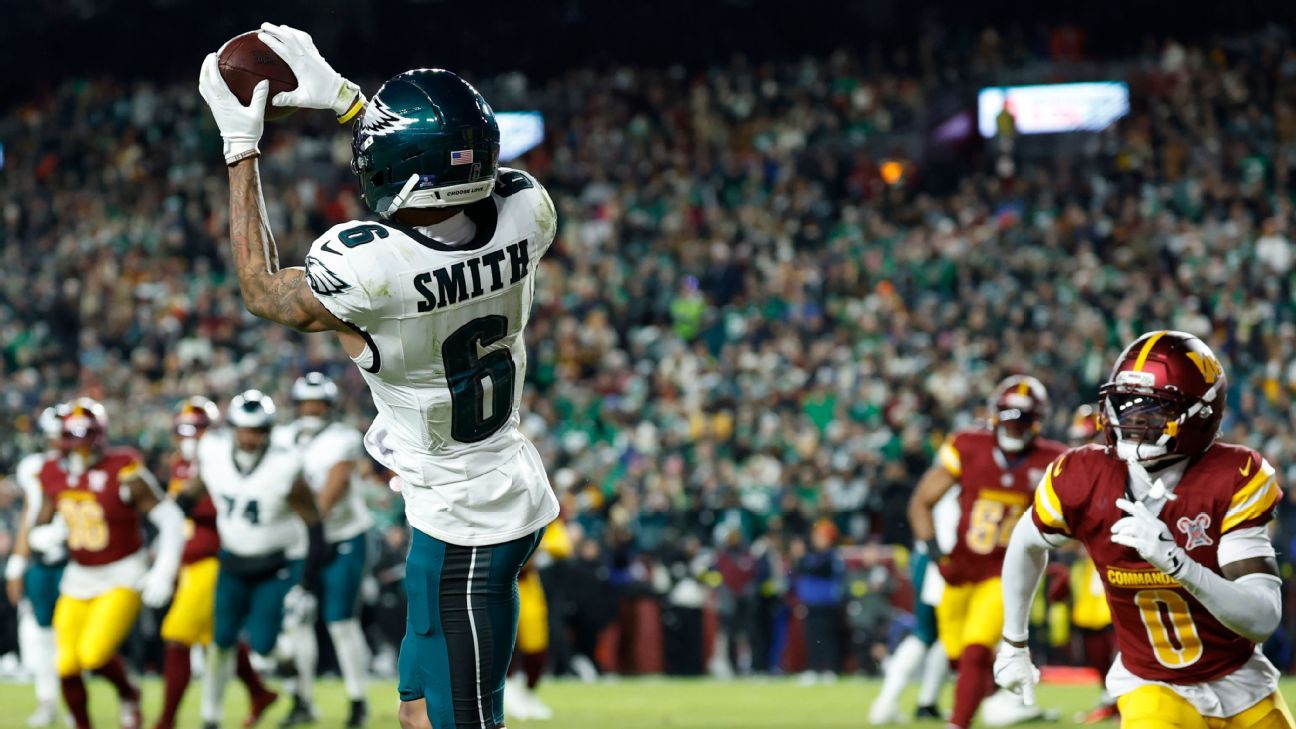 Photo: espn.com
The Jets’ pass rush against Tennessee’s line
The other underdog pick is New York over Tennessee on Sunday. The Jets added playmakers to a pass rush already built around Will McDonald IV, including No. 2 overall pick David Bailey. The Titans’ offensive line came in 26th in Mike Clay’s positional group rankings, and ESPN expects that pressure to force quarterback Cam Ward into the fumble risk and hero-ball mistakes that hurt him last season. In companion coverage on ESPN’s NFL section, the network also argues the Jets’ historic interception drought ends against Tennessee.
The stat lines: Hutchinson and Mitchell
Walder projects stat lines for three players and builds a detailed case for two of them.
Aidan Hutchinson, edge, Detroit Lions: 2.0 sacks, 7 pressures, 25% pass rush win rate. The case rests on game script. The Lions are seven-point favorites over the Saints, which makes it likelier New Orleans is trailing and forced into must-pass situations. Saints quarterback Tyler Shough took sacks at a high 8.3% rate last season, and Hutchinson draws favorable matchups against left tackle Kelvin Banks Jr. or right tackle Taliese Fuaga — both well below average in pass block win rate last season. Hutchinson led Walder’s seasonlong sack projections. Pass rush win rate, for the uninitiated, is simply the share of pass-rush snaps a defender wins against his blocker.
Adonai Mitchell, wide receiver, New York Jets: 5 receptions, 84 receiving yards, 1 touchdown. The case is shorter: he gets open. Over the past two seasons combined, Mitchell ranks seventh among wide receivers in ESPN’s open score metric. Tennessee’s two new cornerbacks, Alontae Taylor and Cor’Dale Flott, were both below average last season in ESPN’s pre-throw cornerback positioning metric.
The third projected stat line, along with the sleepers, touchdown picks and wild cards, runs in the full ESPN article.
Where a spread ends and a market begins
Here is the part that trips up first-time traders. +2.5 is a handicap, not a probability. It says Denver is expected to lose by roughly a field goal, and it settles on margin. A prediction market works differently: you buy a share that pays $1 if the team wins and nothing if it loses, so the price is the crowd’s implied probability. Say a Broncos share trades at 38¢ — that price is the market saying 38%, give or take.
The bridge between the two is the moneyline, and converting one into the other is arithmetic, not intuition. Our odds converter turns any American price into an implied percentage in one step, and our field guide to reading prediction-market odds explains why those percentages carry a spread of their own. ESPN’s article gives us spreads and projections; it does not give moneyline prices for every game. When the number you would trade against is missing, the honest move is to look it up rather than estimate it.
That is the discipline behind comparing gut to odds. An expert projection is a claim about a player or a game script. A market price is a claim about likelihood, weighted by everyone’s money. The two diverge most often in exactly the spots ESPN flags: a quarterback coming off knee surgery, a rookie left tackle, a 26th-ranked offensive line.
The Week 1 news that is not a prediction
ESPN’s reporting around the opener is heavy on contracts and absences. Packers tight end Kraft reached a four-year extension worth up to $92 million, according to ESPN sources. The same sourcing says Crosby shut down Rams trade talks because he wanted to stay with the Raiders, Lamar Jackson will not have a deal with the Ravens before the season starts, C.J. Stroud and the Texans have tabled extension talks, and the Jaguars and wide receiver Washington are unlikely to agree to a deal before the season. Porter is unlikely to play the opener amid an uncertain Steelers future, Rush is still set to start for the Falcons despite back spasms, and the Patriots are working out how to cope without wide receiver A.J. Brown for four weeks. ESPN also runs its own guide to the league’s 2026 rule changes covering red flags, discipline and kickoffs.
Three checks before kickoff
Injuries first. Mahomes’ knee, Simmons ruled out, Brown’s four weeks and Porter’s status move games more than any sleeper list does.
Watch whether the number moves. A spread drifting from +2.5 to +3.5 is information arriving; a projection written days earlier is not.
Separate the stat line from the pick. Hutchinson’s projected 2.0 sacks is a claim about one player in one game script. It does not tell you the Lions cover seven points.
 Photo: FluxrBot illustration
FAQ
Who does ESPN pick to upset in NFL Week 1?
Betting analyst Pamela Maldonado backs two underdogs to win outright: the Denver Broncos, listed +2.5 at Kansas City on Monday night, and the New York Jets over the Tennessee Titans on Sunday. The full set of 15 predictions also covers stat lines, sleepers, touchdown scorers and wild cards.
Is Patrick Mahomes playing in Week 1?
Yes. ESPN reports Mahomes starts for the Chiefs against the Broncos on Monday night, his first start since major knee surgery suffered in Week 15. ESPN sources also say Kansas City is set to start an undrafted rookie at left tackle with Simmons ruled out.
What is the difference between a point spread and prediction-market odds?
A spread is a handicap that settles on margin of victory: +2.5 means Denver can lose by two and still cover. A prediction-market share pays $1 if the team wins outright, and its price in cents is the crowd’s implied win probability — a 38¢ share means roughly 38%.