Tariffs Won't Fund Trump's $5,000 Dividend
Trump's commerce secretary says taxes won't fund the proposed $5,000 dividend if Republicans win the midterms, the Guardian reports. Here's the math.
Trump’s commerce secretary has said taxes would not fund the president’s proposed $5,000 dividend if Republicans win the November midterm elections, the Guardian reported on September 12, 2026. The admission lands roughly seven weeks before voters choose the Congress that would have to act on the promise.
Did the commerce secretary say the $5,000 dividend isn’t funded?
That is the substance of the report, which the Guardian headlined: “Taxes wouldn’t fund $5,000 Trump ‘dividend’ if Republicans win midterms, says commerce secretary.” The Guardian published the story across its US and world editions.
Two parts of that sentence carry the weight. The first is who said it — not a Democratic critic and not an outside research group, but the cabinet officer who runs trade policy for this administration. The second is the condition attached: “if Republicans win midterms.” That framing says the funding question is not settled by revenue collections alone. It is tied to what Congress does after November.
How tariff money actually works
A tariff is a tax on an imported good. The importer of record pays it at the border — not the foreign government and not the foreign manufacturer — and the receipts go to the US Treasury. Treasury reports them every month on a line called customs duties, inside the Monthly Treasury Statement, the same document that shows what income and payroll taxes bring in.
That structure gives any promise to mail Americans money out of tariff revenue a testable shape. Illustrative arithmetic, using only the $5,000 figure from the headline:
- Multiply the payment by the number of recipients. At $5,000 a person, every 10 million recipients costs $50 billion.
- Set that number against a full year of customs-duty receipts.
- Treat receipts as a flow, not a savings account. One year of tariff collections covers one year of checks, and it is competing with everything else already paid for out of general revenue.
There is a second wrinkle, and it shrinks the revenue side rather than growing it. Tariffs raise the price of imported goods, and buyers respond by importing fewer of them. Collecting a larger amount per item on a smaller number of items does not scale in a straight line — which is why this arithmetic tends to disappoint whoever is doing the promising.
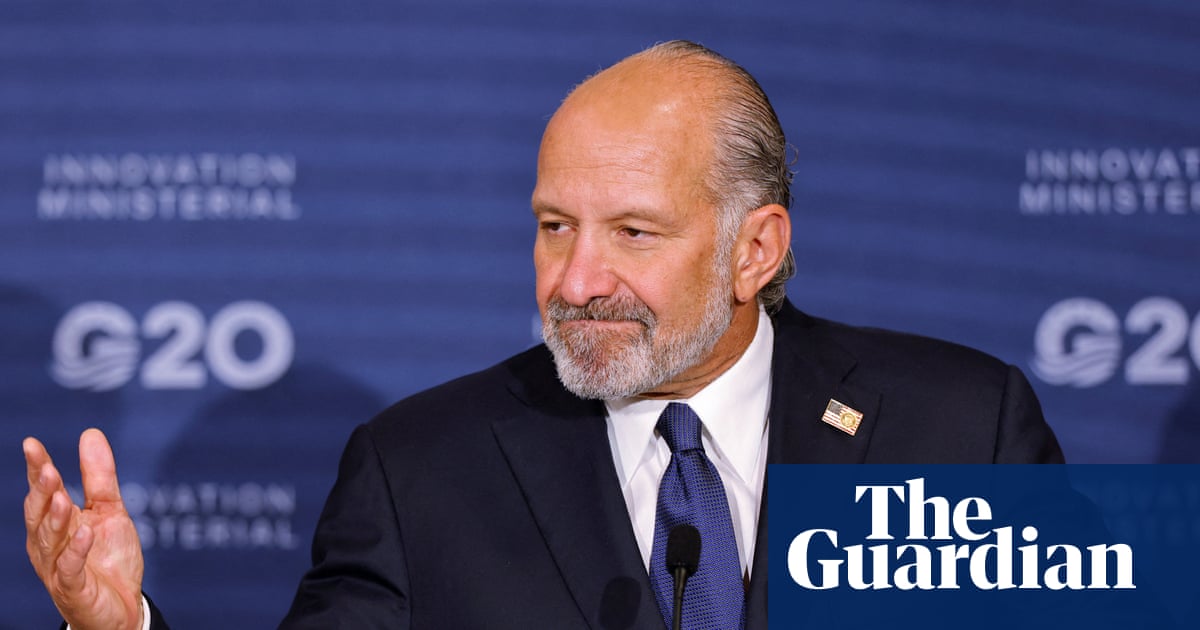 Photo: The Guardian
Why the midterm result decides it
The Guardian’s framing makes November the hinge, and the reason is procedural. Election Day is November 3, 2026, and the Congress seated in January writes the tax law that determines whether a $5,000 payment has a funding source at all. A promise that needs legislation does not need revenue first; it needs votes.
That is a different kind of risk than a budget shortfall. Revenue either arrives or it does not. Votes can be lost for reasons that have nothing to do with the tariff math — the shape of the majority, the leadership’s priorities, the price of everything on the shelf in the districts that decide control.
What a trader can put money on
There is no tidy contract that settles on “the dividend gets mailed.” As we wrote when a single strategist quote moved the Texas conversation without producing a live price, a memorable political statement and a tradeable market are two different things. Quotes do not get listed.
What is tradeable is the condition bolted onto the promise. Markets on which party controls the House and which controls the Senate are the closest available price on whether this dividend is ever funded — a contract pays $1 if the outcome happens and $0 if it does not, so consider a share changing hands at 55 cents (figures illustrative) as the market putting the chance near 55%, and you can run the payoff side of that trade through a payout calculator before you size it. Those control markets have already moved once this cycle, when split primary results forced a recalibration of the November picture.
A cabinet secretary’s admission matters to traders even when nothing is directly listed on it, because it moves the inputs underneath the contracts that are.
 Photo: The Guardian
What to watch next
Three things, in order of usefulness. First, whether the administration restates where the $5,000 comes from and in what legal form; a payment drawn from tariff receipts and a payment created by a tax-law change travel different paths through Congress and have different odds of surviving the trip. Second, the customs-duty line in each monthly Treasury statement, which is the actual revenue pool being cited. Third, the House and Senate control markets, which remain the only place this promise currently has a number attached to it.
The commerce secretary’s answer, as reported by the Guardian, is that the number does not reach $5,000.
FAQ
Did the commerce secretary say the $5,000 dividend isn’t funded?
The Guardian reported on September 12, 2026 that the commerce secretary said taxes would not fund the $5,000 dividend if Republicans win the midterms. The statement came from the administration’s own trade chief rather than an outside critic. The Guardian ran the story in both its US and world editions.
Where does tariff money go?
Importers pay tariffs at the US border and the receipts go to the Treasury. They show up each month on the customs duties line of the Monthly Treasury Statement, in the same report as income and payroll tax collections. That revenue is a yearly flow, not a reserve that can be drawn on repeatedly.
Is there a prediction market on the $5,000 dividend?
Not one that settles directly on the payment being mailed. The nearest tradeable markets are on which party controls the House and the Senate after November 3, 2026, because the incoming Congress would write any tax law the payment depends on. Those control markets have already repriced once this cycle after split primary results.