Judge Blocks Trump Foreign Student & Journalist Visa Limits
Federal judge halts Trump admin rule capping foreign student visas at 4 years and journalist visas at 240 days, calling DHS rationale "exceptionally weak."

A federal judge in Boston on Monday blocked the Trump administration from implementing a rule that would cap how long foreign students and journalists can remain in the United States, halting the policy one day before it was scheduled to take effect. The ruling preserves a visa system that has operated for nearly five decades.
F. Dennis Saylor IV, a US district judge appointed by George W. Bush, ruled in favor of a coalition of unions and higher education advocacy groups, finding that the Department of Homeland Security adopted the policy based on “exceptionally weak” rationales and failed to consider less restrictive alternatives.
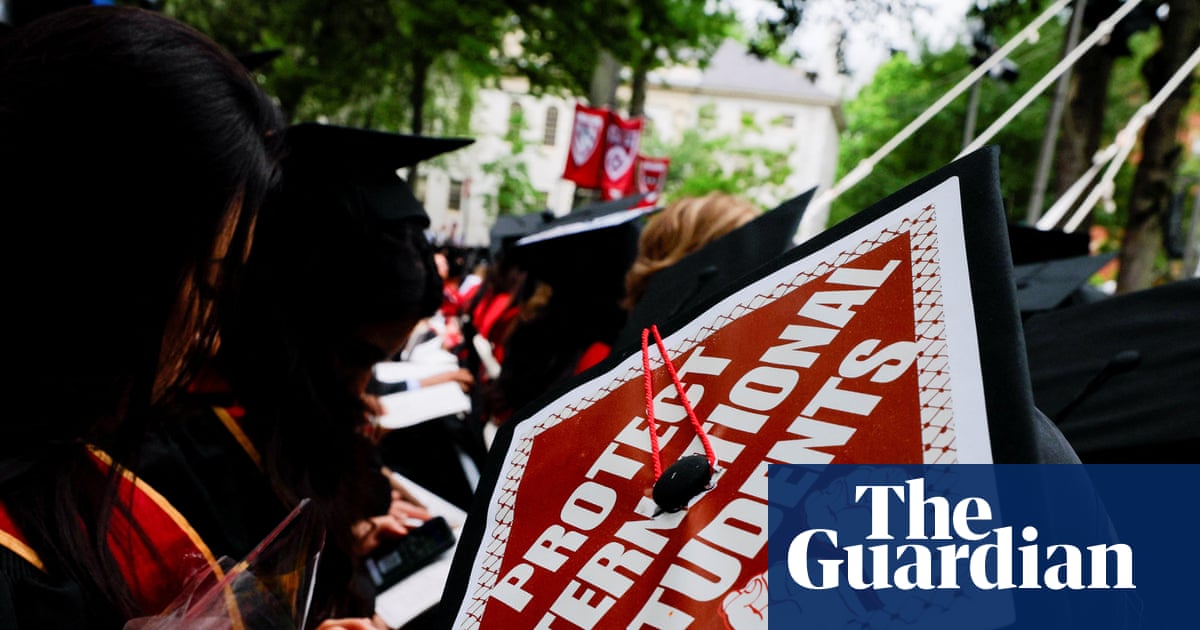 Photo: The Guardian
What the blocked rule would have changed
Under the rule DHS adopted in July, F visas for international students and J visas for cultural exchange workers would be capped at four years. I visas for foreign journalists, which currently can last years, would be limited to 240 days.
The current system issues visas for “duration of status,” meaning holders can remain as long as they maintain their student enrollment or work assignment. That framework has been in place since the 1970s and currently covers about 1.6 million F visa holders and 500,000 J visa holders, according to the ruling.
Major research universities such as MIT and Harvard have large shares of foreign students, particularly at the graduate level. Judge Saylor wrote that if the rule took effect, such universities would likely suffer hundreds of millions of dollars in costs and enrollment would decline. “The damage to the higher education system and to the economy of the United States is likely to be catastrophic,” he wrote.
Why DHS said it needed the change
DHS had cited national security concerns and the need to prevent visa fraud. James Percival, the DHS general counsel, criticized Saylor’s ruling in a statement, saying that under it US Immigration and Customs Enforcement must “permit this rampant abuse of our immigration system.”
“Come on a student visa, take one class per semester, and stay here for decades,” Percival said.
Judge Saylor found that DHS had not met its legal obligations to engage with concerns about the policy change or to justify why a four-year cap — rather than some other duration — was necessary.
What the ruling means for higher education
Miriam Feldblum, head of the Presidents’ Alliance on Higher Education and Immigration, one of the plaintiffs, said the judge’s ruling recognized the harm the rule would cause to international students, universities, and the economy.
“While the case continues, this relief preserves the longstanding system that enables our colleges and universities — and our country — to attract, educate, and retain global talent,” Feldblum said.
Saylor noted that the duration-of-status system has permitted tens of millions of foreign students and researchers to come to the US over nearly five decades, leading to “groundbreaking research in science, medicine, and technology, substantial economic growth, and a host of other benefits, often on a vast scale.”
 Photo: FluxrBot illustration
How immigration policy markets track judicial timing
Prediction markets that reference US immigration policy often move on the velocity of court intervention rather than the substance of any one rule. A preliminary injunction issued the day before implementation — as happened here — signals that the legal challenge has enough merit for a judge to preserve the status quo while the case proceeds.
Traders watching similar contracts know that when a judge uses language like “exceptionally weak” to describe an agency’s reasoning, the rule faces long odds of surviving on the merits. For contracts tied to student visa volumes or foreign enrollment at US universities, Monday’s ruling keeps baseline assumptions intact while the litigation continues.
The case is not over. The injunction preserves the current system during further proceedings, but DHS can still defend the rule in court or revise its approach.
Primary source: The Guardian
FAQ
What visa types were affected by the blocked Trump rule?
The rule would have capped F visas for international students and J visas for cultural exchange workers at four years, and limited I visas for foreign journalists to 240 days. Currently about 1.6 million people hold F visas and 500,000 hold J visas under a duration-of-status system that has been in place since the 1970s.
Why did the judge block the Trump visa rule?
Judge F. Dennis Saylor IV ruled that DHS adopted the policy based on ‘exceptionally weak’ rationales. He found the agency failed to meet its legal obligations to engage with concerns about the policy or consider less restrictive alternatives, despite citing national security and visa fraud prevention.
Does the ruling mean the visa caps are permanently stopped?
No, the ruling is a preliminary injunction that preserves the current duration-of-status system while the case continues in court. DHS can still defend the rule in further proceedings or revise its approach.