Hormuz Coordinates Deal: What Contracts Actually Pay On
Iran says it reached an understanding with Oman on a Hormuz shipping route. Here is why event contracts on a strait reopening should barely move on that.
Iran’s foreign ministry spokesperson Esmail Baghaei said Wednesday that Tehran and Muscat have reached an understanding on the geographic coordinates of a shipping route through the strait of Hormuz, and that a joint statement is in the final stages of drafting — provided, he added, that certain third parties do not interfere.
He then took most of the air out of it. Any Iran-Oman agreement, Baghaei said, would not by itself guarantee security in the waterway.
What was actually agreed, and what wasn’t
Reporting by the Guardian quotes Baghaei saying the two sides reached a mutual understanding on “the geographical parameters of the route under discussion.” He called the negotiations “professional” and “moving forward.”
A senior Iranian source and two regional officials told Reuters the proposed deal would give Tehran control over ships entering the gulf through the strait — one of the biggest concessions to Iran yet. Those same sources pushed back on Donald Trump’s assertion that a deal reopening the strait was imminent, saying important details remained unagreed. Separately, Trump said an announcement on a US-Iran peace deal could come as soon as Wednesday; that is a different thing from the strait reopening, and the two should not be read as one event.
The context, per the Guardian: the strait was a neutral waterway before the US and Israel launched joint strikes in February, which prompted Iran to attack shipping in the region. A broader ceasefire with Washington would reopen the strait and lift a US blockade on Iranian ports that has brought upheaval to global energy markets. The Iran-Oman understanding reads as a stepping stone toward that, not as the thing itself.
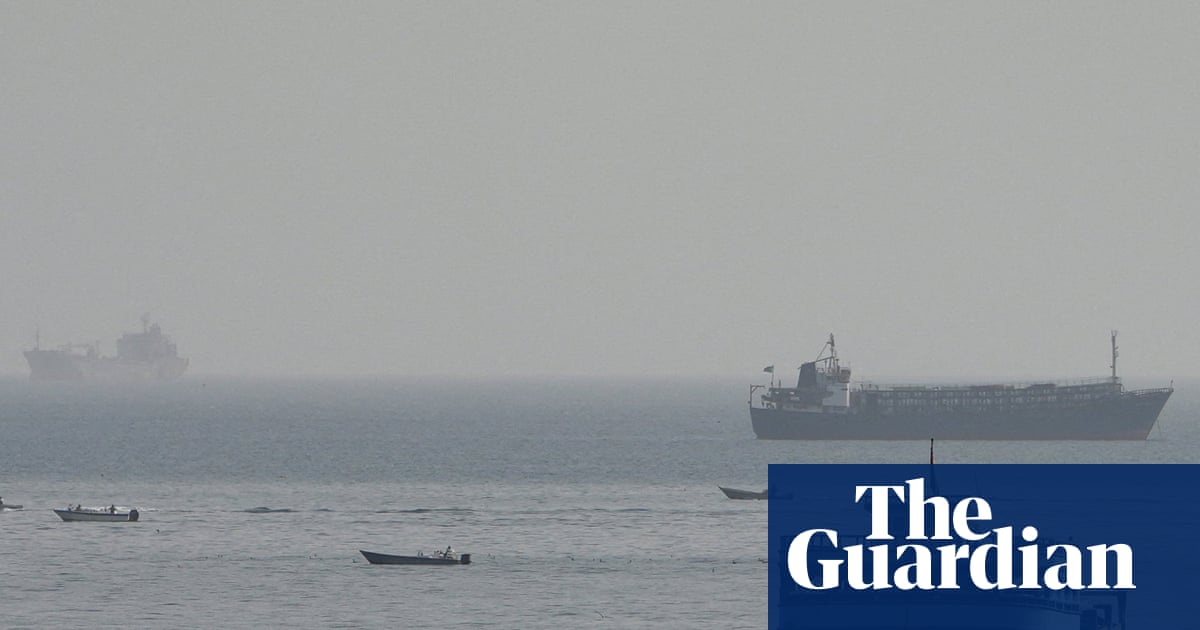 Photo: bsky-guardian
The deal is a chain, and only the first link is done
Event contracts resolve on written criteria, not on sentiment. A market asking whether the strait reopens to commercial traffic by a given date does not pay on a coordinates memo. It pays on the strait reopening.
| Step | Status per source | What a contract needs |
|---|---|---|
| Iran-Oman agree route coordinates | Reached, per Baghaei | Usually not a resolution trigger |
| Joint Iran-Oman statement published | “Final stages” of drafting | Verifiable, datable event |
| US endorses the arrangement | Not stated | Would be the real repricing |
| Broader US-Iran ceasefire | Trump says possible; sources dispute imminence | Typical resolution source |
| Strait reopens / blockade lifted | Not happened | Terminal outcome |
Take a purely hypothetical example, not a read on this story: if a trader held each of the last four steps at 70%, the terminal outcome would sit near 24% — 0.70 to the fourth power — even though every individual step looks likely. That is the arithmetic traders skip when they buy the headline. Our odds converter moves between the percentage in your head and the cents on screen.
The “third parties” clause
Baghaei conditioned the joint statement on non-interference by unnamed third parties. That is an explicit, pre-announced escape hatch, with no timeline attached, which means the announcement can slip indefinitely without anyone breaking a promise.
How to price a partially-confirmed de-escalation
The source structure is thin. The strongest claim — Tehran gaining control over gulf entry — comes from one Iranian source and two regional officials speaking to Reuters. That is reported, not confirmed by any government on the record.
The principals also disagree in public. Trump has described a strait-reopening deal as close; the regional sources told Reuters details remain open. Contracts written on a specific date get whipsawed by exactly that pattern.
And the asymmetry is unusual. An arrangement handing Tehran partial control over a waterway that was neutral before the February strikes is not a return to the status quo — it is a new arrangement other governments may contest. “De-escalation” and “stable” are not the same variable. Contracts on maritime incidents may not fall even if contracts on diplomacy rise.
What to watch next
Three observable things, in order of how much they should move a price:
- Publication of the joint Iran-Oman statement. Dated, quotable, and the first item on the chain a resolution source can point to.
- Any US comment on endorsement. Without Washington, the deal is bilateral paperwork over a waterway the US is blockading.
- Shipping-incident reports in the strait. Behaviour on the water is a faster signal than statements about it.
Watch also for a specific reopening date. Vague de-escalation is hard to price; a date creates a settlement question, which creates a market, which creates a spread worth trading.
If you are new to these instruments, the mechanics are simple: a contract pays $1 if the described event happens and $0 if it doesn’t, so the price in cents reads as the market’s implied probability. Buying at 30c something you believe is 45% likely is the whole trade; sizing it is a separate question, and the Kelly calculator does that arithmetic. Until a resolvable event lands, the edge here sits in the gap between what headlines imply and what contracts resolve on — the same gap we walked through in Trump Threatens Iran Again.
FluxrBot tracks the Iran and Hormuz books if you would rather not refresh them by hand.
Primary source: bsky-guardian
FAQ
Does the Iran-Oman coordinates deal reopen the strait of Hormuz?
No. Iran’s spokesperson described an understanding on route coordinates and a joint statement still being drafted. Reopening the strait would require a broader ceasefire with the United States, which sources told Reuters is not yet agreed.
Why wouldn’t a de-escalation headline move a Hormuz contract much?
Event contracts pay on written resolution criteria, usually a verifiable reopening or ceasefire, not on a diplomatic understanding. Each intermediate step must clear before the terminal outcome pays, so the headline moves sentiment more than settlement odds.
What would actually reprice these markets?
Publication of the joint Iran-Oman statement, an explicit US endorsement of the arrangement, or a stated reopening date. US involvement matters most, since Washington maintains the blockade on Iranian ports.
If you want to see how fast a multi-stage bet decays, run the legs through our conditional chain probability calculator and compare the joint figure to the market’s price — try it here.