Trump Demands 'Colossus' Washington Statue at Smithsonian
Trump has demanded the Smithsonian install a George Washington statue called 'Colossus.' What the report says, who decides, and why no market exists.
President Trump has demanded that the Smithsonian Institution install a statue of George Washington called “Colossus,” according to a New York Times report. The Smithsonian has published no response, and the reporting names no host museum, no sculptor, no design and no cost.
The account moved quickly beyond the Times. It was picked up across news feeds, including The Guardian’s world and US desks, within hours.
What the report establishes, and what it leaves out
Start with the record, because the gaps are the story.
The demand is real: a president has asked a museum to install a monumental figure of the first president, and has given it a name. Everything past that is unstated. The Times report does not identify which of the Smithsonian’s buildings would house it. It does not identify a sculptor, a foundry or a donor. It does not attach a price. And the institution itself has said nothing publicly that can be checked.
That is a thin basis for coverage, and it is worth being blunt about it: if you read an article this week that specifies the height, the marble, the hall or the budget, look at what it is citing. There is no document to cite.
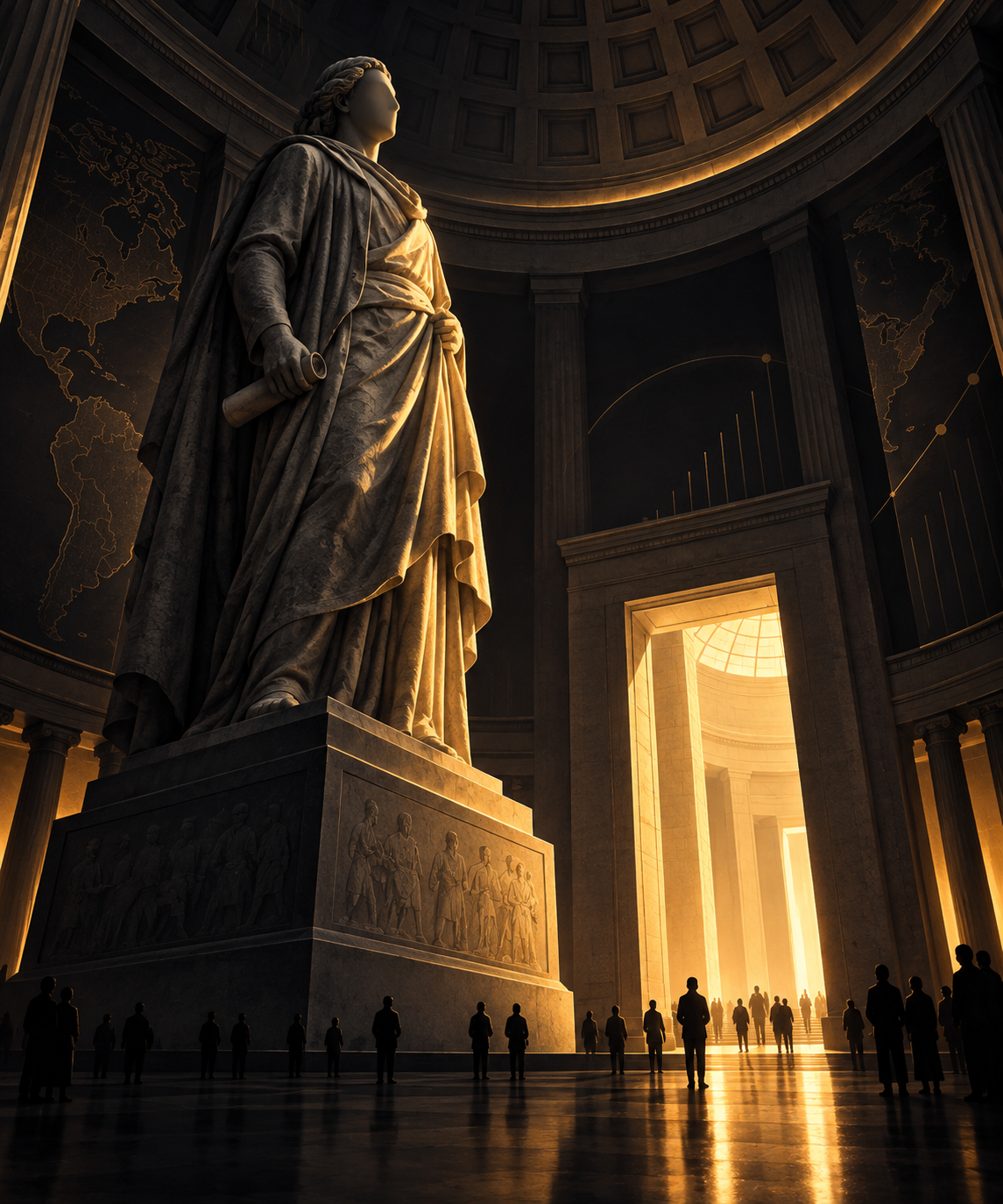 Photo: FluxrBot illustration
The name does the arguing
“Colossus” points at the Colossus of Rhodes, the bronze harbor statue of the sun god Helios that ancient writers numbered among the seven wonders of the world. The reference is to overwhelming scale in a public entrance — a figure meant to be looked up at from below.
Washington has been cast and carved for two and a half centuries: in front of state capitols, on courthouse lawns, at the center of traffic circles. The subject is not the unusual part of this request. The name is a statement about how the figure is meant to be experienced, and the requested setting is indoors, in a museum built for exhibitions rather than monuments.
Who actually decides
The Smithsonian is not a cabinet department. Per its charter as summarized on Wikipedia, it is a trust instrumentality of the United States, governed by a Board of Regents, with Congress writing its appropriations line.
That structure cuts in two directions at once.
A president does not sit on the Board of Regents and does not commission the institution’s exhibits. A demand addressed to a museum is, in governance terms, a request. But Congress funds the Smithsonian, and Congress can attach conditions to money in a way no board can quietly decline. Which of those two things this becomes — a request that fades, or a condition attached to a spending bill — is the only version of the story with real force behind it.
Why there is no market, and what would create one
Prediction markets price questions with a binary answer, a stated deadline and a named resolution source. A contract settles at $1 if the event happens and $0 if it does not, so the trading price is the crowd’s implied probability. Our five-minute field guide to reading Polymarket odds walks through the mechanics.
A statue commission fails that test three ways. “Installed” has no clean definition — a regents’ vote, a groundbreaking, a delivery to a loading dock and a public unveiling are four different dates. Nobody holds an informational edge on a curatorial decision made by a small board in Washington. And there is nothing to hedge against, so the only participants would be people trading a headline rather than an outcome.
The funding version is different, and it is where a trader would actually look. If a “Colossus” provision ends up written into the Smithsonian’s appropriations, the question stops being curatorial and becomes congressional: does this spending bill pass, by what date, and does the government stay open. Those contracts exist already, they resolve on public votes and enrolled text, and exchanges list them routinely because the procedure is legible. Congressional deadlines are among the better-priced questions in politics.
The comparison cases make the distinction concrete. When Nashville’s airport board voted on the Dolly Parton renaming, there was an institution, a scheduled vote and an outcome — the kind of thing a contract can be written against. When a single strategist quote moved the Texas race narrative with no live prices attached, the honest read was that a statement is not an event. This statue sits in the second category for now.
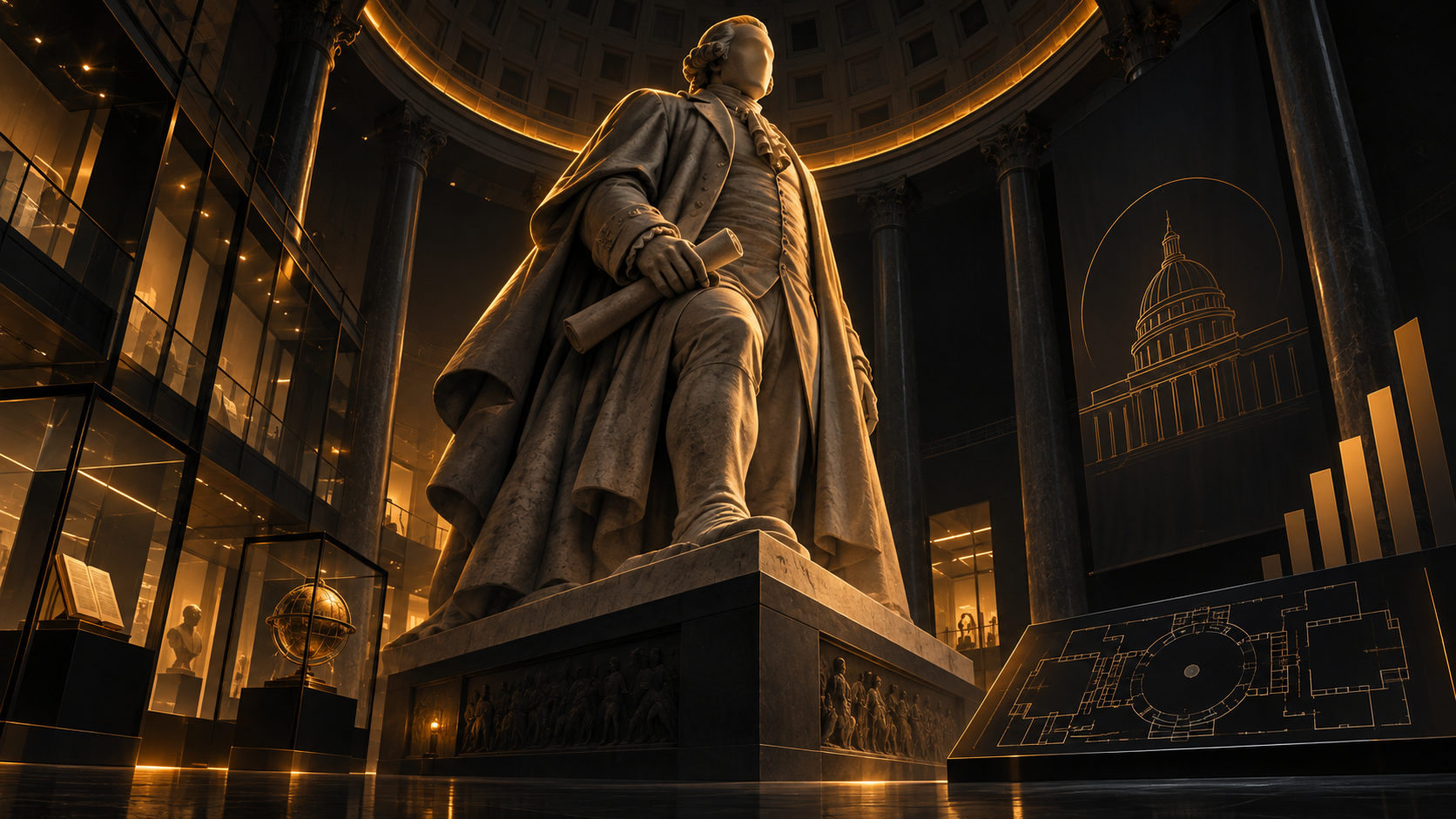 Photo: FluxrBot illustration
What to watch next
Four signals would turn this from an arts item into something with consequences:
- A named building. A host museum implies a site survey, a structural review and a curator who has to be convinced.
- A regents’ action. Any vote, agenda item or public statement from the Board of Regents establishes whether the institution treats this as a request to consider.
- A funding source. A private donor, a congressional earmark or an institutional line item each carries different implications — and only the congressional one creates a deadline.
- Appropriations language. A condition in a spending bill is the moment the president’s demand acquires leverage, and the moment the question becomes one that markets already know how to price.
Until one of those appears, the reporting consists of a demand and a name.
Primary source: The New York Times
FAQ
Did Trump order the Smithsonian to install the statue?
He demanded it, according to a New York Times report, but the Smithsonian is governed by a Board of Regents and is not a cabinet department. A president does not commission its exhibits. Congress, however, writes the institution’s appropriations and can attach conditions to that money.
How big is the ‘Colossus’ Washington statue?
The reporting does not state a height, a material, a sculptor or a cost. The name references the Colossus of Rhodes, the ancient bronze harbor statue counted among the seven wonders, which signals monumental scale rather than a specific measurement.
Can you trade on whether the statue gets installed?
No exchange lists it. ‘Installed’ could mean a board vote, a groundbreaking, a delivery or an unveiling, so there is no clean resolution source, and no trader has an edge on a curatorial decision. The tradeable version would be a congressional one, if the project ever appears in appropriations language.
Has the Smithsonian responded?
Not publicly, in any statement that can be checked. The institution has published no response to the demand as of this reporting.