Trump Approval Falls to 33% — Lowest of His Presidency
President Trump's approval rating dropped to 33% in a Reuters/Ipsos poll, the lowest of his presidency, as 80% of Americans expect prolonged Iran conflict.
President Trump’s approval rating has fallen to 33%, the lowest point of his presidency, according to a Reuters/Ipsos poll released Sunday. Just one in three Americans now approve of his job performance, while 64% disapprove — down from 35% approval earlier this year, according to Reuters.
The drop comes as the United States remains engaged in military operations against Iran, with an overwhelming majority of Americans expecting the conflict to continue indefinitely.
 Photo: reuters-top
The Numbers Behind the Drop
The Reuters/Ipsos survey, conducted over four days, found 33% of respondents approved of Trump’s performance in the White House while 64% disapproved. The figure matches Trump’s lowest approval rating from his first term, recorded in December 2017, but arrives in a fundamentally different context: active U.S. military engagement in Iran with no clear exit strategy.
After returning to the White House in 2025 with just under half the country approving of his presidency, Trump’s popularity this year took a hit after he ordered strikes on Iran alongside U.S. ally Israel, according to Reuters.
Iran War: The Defining Factor
Some 80% of Americans believe U.S. involvement in Iran “will go on for an extended period of time,” the Reuters/Ipsos poll found. That sentiment crosses party lines: 87% of Democrats and 71% of Republicans expect a prolonged engagement. Just 16% said the conflict would be resolved quickly.
The poll results suggest the Iran operations have become a political liability. Public concern mounted that the administration lacked a viable strategy to de-escalate or exit as news of casualties and retaliatory strikes continued to emerge during the survey window.
| Group | Expect Prolonged Conflict | Expect Quick Resolution |
|---|---|---|
| All Americans | 80% | 16% |
| Democrats | 87% | — |
| Republicans | 71% | — |
What Prediction Markets Might Price
Presidential approval ratings below 35% historically weigh on midterm election outcomes, and prediction-market participants watch these thresholds closely. Contracts tied to 2026 House and Senate control typically reprice when approval moves outside the 40–50% band, though the relationship sixteen months before an election remains loose.
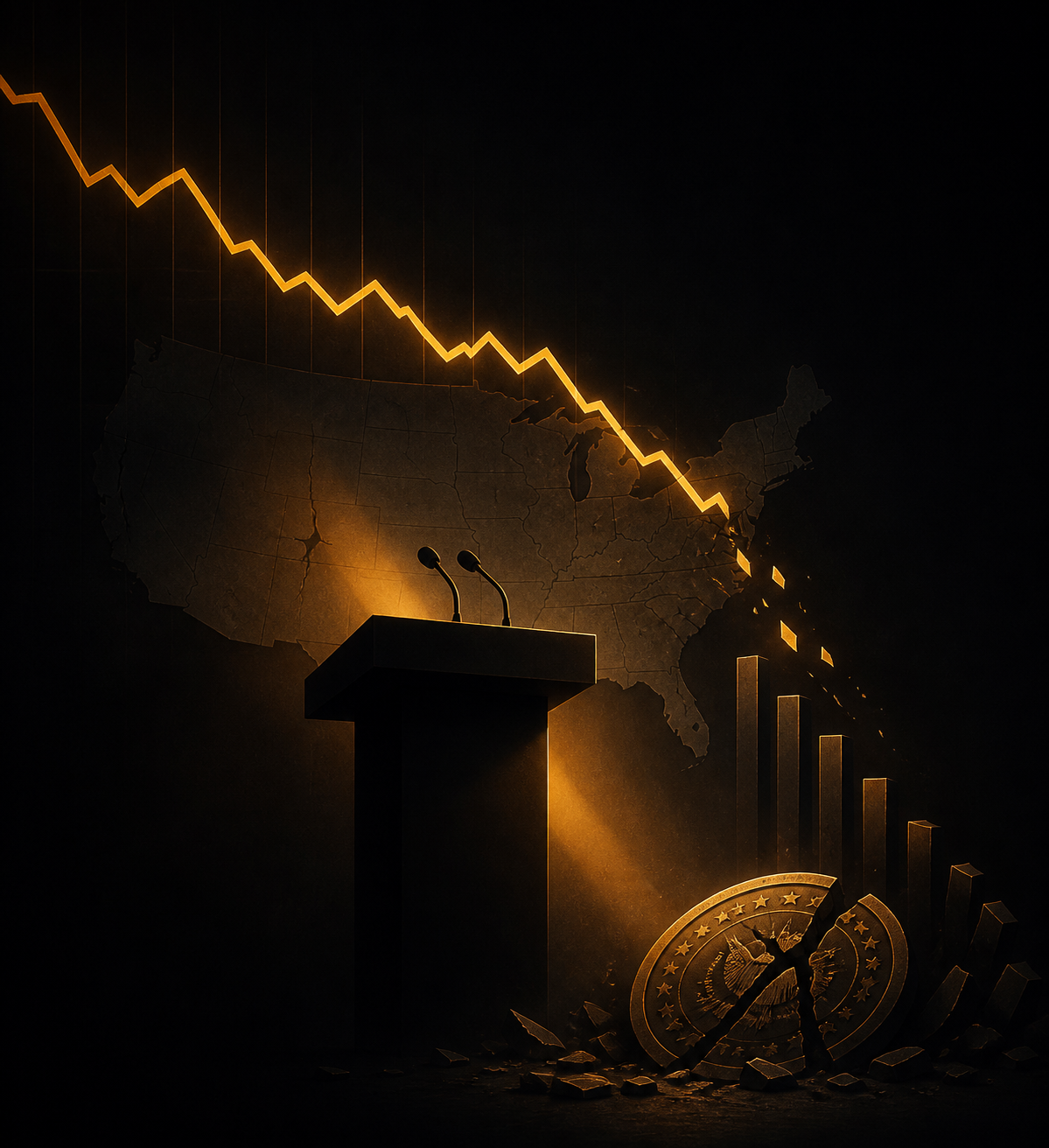 Photo: FluxrBot illustration
The Iran sentiment data — 80% expecting prolonged conflict, including 71% of Republicans — may carry more durable signal value than the approval number itself. If a supermajority of GOP voters believe the war will drag on, that creates pressure within Trump’s own coalition, a dynamic that shapes how traders model swing-district outcomes.
Markets asking whether Trump would order a ceasefire or pullback before year-end would likely incorporate this data, though historical precedent suggests Trump has been indifferent to polling pressure and unlikely to reverse course based on survey results alone.
Historical Context: Matching the First-Term Low
The 33% figure ties Trump’s December 2017 nadir, recorded during his first term amid investigations and legislative stalemates. But the parallels end there. The 2017 low came during peacetime and rebounded within months. The current figure arrives as American forces remain actively engaged in strikes, and four in five Americans expect no quick resolution.
Historically, presidents at 33% approval face severe headwinds in midterm elections. George W. Bush polled similarly low in 2006 before his party lost thirty House seats and six Senate seats that November. Whether the same dynamic applies in 2026 depends on variables beyond current polling: battlefield outcomes, casualty counts, and the administration’s willingness to shift strategy.
Partisan Breakdown and Crossover Concern
While the poll did not release full partisan crosstabs, the Iran data reveals meaningful concern within Trump’s own coalition. Seventy-one percent of Republicans expect prolonged U.S. involvement — a figure that suggests unease even among voters who typically support the president’s foreign policy decisions.
Democratic disapproval remains near-total, but the movement that matters politically is among independents and soft Republicans. When a supermajority of GOP voters believe the war will drag on, the administration faces pressure from both its base and swing voters simultaneously — a rare and politically difficult alignment.
What Happens at 33%
Presidential approval below 35% historically constrains a White House’s ability to advance its agenda. Congressional allies grow cautious about supporting controversial proposals, and opposition legislators sense an opening. For Trump, the immediate risk is potential defections on upcoming votes tied to Iran funding or military authorization.
Whether the 33% figure stabilizes or continues to slide will determine how markets price 2026 outcomes. A sustained rating in the low 30s would likely trigger pressure within the administration for course correction — either a diplomatic push to freeze the Iran conflict or a messaging pivot. But Trump’s governing style has never relied on poll-driven adjustments, leaving both analysts and traders uncertain which path becomes more probable.
The Reuters/Ipsos poll offers a snapshot of a presidency under strain. One in three Americans approve, and four in five expect the war to continue. How those numbers evolve depends on battlefield developments, diplomatic efforts, and decisions no polling data can predict.
Primary source: reuters-top
FAQ
What is Trump’s current approval rating according to the Reuters/Ipsos poll?
Trump’s approval rating is 33%, with 64% of Americans disapproving of his job performance. This is the lowest approval rating of his presidency and matches his December 2017 low from his first term.
How many Americans expect the Iran conflict to continue long-term?
80% of Americans believe U.S. involvement in Iran will go on for an extended period of time. This includes 87% of Democrats and 71% of Republicans, showing broad bipartisan concern about a prolonged conflict.
How do presidential approval ratings this low affect midterm elections?
Presidents with approval ratings around 33% historically face severe midterm losses. George W. Bush had similar approval in 2006 before his party lost thirty House seats and six Senate seats, though each election cycle depends on many factors beyond approval alone.