Norway's Princess Astrid: Unverified Death Reports
An Euronews headline says Norway's Princess Astrid died days after her brother King Harald's funeral. The wire copy never reached us, so nothing here is.
Reports that Norway’s Princess Astrid has died are circulating across three international news feeds. We cannot confirm them: the wire copy behind the headline did not reach our desk intact, and we are holding the story until it does.
Here is what we actually have, and why that is not enough to write an obituary.
What reached the desk
The item arrived as a headline plus feed metadata. The headline reads: “Norway’s Princess Astrid dies two days after funeral of brother King Harald,” credited to Euronews. The aggregation layer shows it surfacing in three feeds — a world-news feed, a Reuters top-stories feed and a BBC world feed — with roughly one US pickup and about 34 international pieces logged in the preceding 24 hours.
That is a headline count, not a confirmation count. Three feeds carrying the same string can mean three newsrooms reported independently, or it can mean one article was syndicated and re-filed. Nothing in the material we received lets us tell which.
The document attached as the article body was not an article. It was minified JavaScript from a web application bundle — library code, with no text about Princess Astrid, King Harald, a funeral, or any of the outlets named in the headline. There is no date, no location, no cause of death, no quoted statement, and no byline anywhere in it.
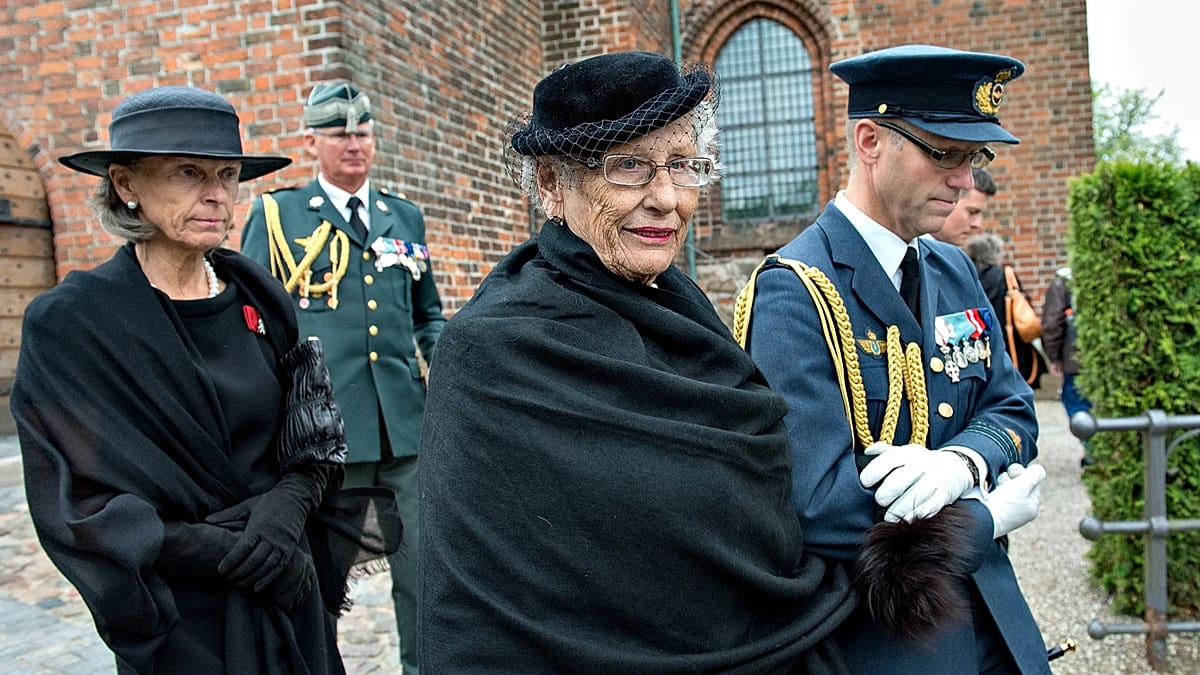 Photo: Euronews
The contradiction the desk flagged
A second problem sits inside the headline itself. It describes the funeral of King Harald as having taken place two days before his sister’s death was reported. Our own verification check flagged that as inconsistent with the widely documented status of Norway’s reigning monarch, Harald V. We cannot resolve that from the material in front of us, and we are not going to pick a version. Either the headline is wrong, or our check is out of date, and both possibilities are reasons to wait rather than publish.
The numbers we are not printing
Her age is not in anything we received. Nor is a cause of death, a location, funeral arrangements, or a statement from the Royal House. Age is the first figure readers search for and the first that gets attached to a name without a source, so we are stating plainly: any age you see next to “Princess Astrid” in the next few hours did not come from this report, because this report contains none.
The record of her life — her birth, her marriage, her official duties for the crown — belongs to the Norwegian Royal House and to the reference works that draw on it, including her Wikipedia entry. We have not restated their contents here as our reporting, and we will not until a Royal House statement or a bylined article from a named outlet is in hand.
Why no market exists on this
There is nothing to trade. A prediction-market contract pays out on a defined future event, with a resolution date and a named source of truth; an event that has already been announced resolves the moment it is reported, so no one can hold a position in it. Monarchy touches these markets one level removed, in political risk — a succession that redirects a government, a regency question, a constitutional dispute. Norway’s reporting today contains none of that, and we are not going to construct an angle the story does not have.
The transferable lesson is about the opposite situation: a contract that is live when a claim like this lands. Prices on breaking, single-source news are the thinnest and most misleading prices in these markets, and our field guide to reading Polymarket odds as probabilities covers how to tell a real signal from a thin book. Jane Street’s retreat and what it did to liquidity is the longer version of the same point: who is on the other side matters more than the number on the screen.
 Photo: FluxrBot illustration
What would let us publish
Three things, in order. A statement from the Royal House confirming the death and the circumstances. Bylined copy from a named correspondent at Euronews or a wire service, with a date and a location. And a resolution of the King Harald discrepancy — either a correction to the headline or evidence that our reference point is stale.
Until at least the first two exist, this page stays as it is: a record of a claim in circulation, not an account of a death.
Primary source: Euronews
FAQ
Did Norway’s Princess Astrid die?
We cannot confirm it. An Euronews headline reporting her death is circulating across three aggregated news feeds, but the article body never reached our desk and no Royal House statement is available to us. We are holding the story until verified copy exists.
How old was Princess Astrid?
No age appears in any material we received, and we are not publishing a figure we cannot source. The Norwegian Royal House and the reference works that draw on its records are the authoritative sources for her birth date and biography.
Is King Harald of Norway dead?
The headline describes his funeral as having taken place two days before the reported death of his sister. Our verification check flagged that as inconsistent with the documented status of Harald V, and we have no material that resolves the conflict either way.
Are there prediction-market contracts on this?
No. Contracts pay out on defined future events, and an already-announced death resolves the instant it is reported, so there is nothing to hold a position in. Monarchy-related trading happens one level removed, on succession and political-risk questions, none of which are present here.