Mexico Crypto Mine Story: What We Could Not Verify
A 'hidden crypto mine in Mexico' headline reached our feed with no checkable text behind it. Here is what is unverified and how such stories trade.
A headline attributing to Reuters the discovery of a hidden cryptocurrency mining farm in Mexico’s mountains entered our newswire tracking with three separate pickups logged, including Yahoo News. We pulled the article to write about it. The text attached to the story was not an article. It was minified JavaScript, and it contained no reporting of any kind.
So this piece does what the draft before it should have done: it tells you exactly what we could not confirm, why, and what would settle it.
What the source material actually contained
The file behind the headline is an application bundle — Angular/Closure-style library code. Its opening lines are copyright notices (“Copyright 2005, 2007 Bob Ippolito”, “Copyright Google LLC”) and an MIT-style license reference pointing to angular.dev/license. The rest is utility functions: browser detection for Opera, Firefox, Safari and Edge, base64 encoding, array helpers.
It contains no Reuters byline, no dateline, no mention of Mexico, cartels, mining rigs, electricity or any agency. There is no September 12, 2026 anywhere in it. Every specific claim in our earlier draft — the date, the three pickups framed as corroboration, the characterisation of the operation — was built on a headline and a URL, not on reporting. That is on us.
The likeliest explanation, and this is our inference rather than a confirmed fact: the page failed to render for our scraper and returned the site’s client-side code instead of the article body. That happens, and it is exactly why a headline alone is not a source.
We have also removed the Reuters link. We will not print a citation we cannot open and check, and neither should you.
What is unconfirmed — all of it
No number in circulation about this story has a primary source we can see:
- How many machines were at the site
- How much power it drew, and whether that power was paid for, diverted or stolen
- Which organisation operated it
- Whether Mexican authorities raided, seized or merely documented it
- Whether any US agency is involved
Treat any rig count, megawatt figure or cartel name attached to this story on social media as unverified until a government body or a named investigator puts its name to it.
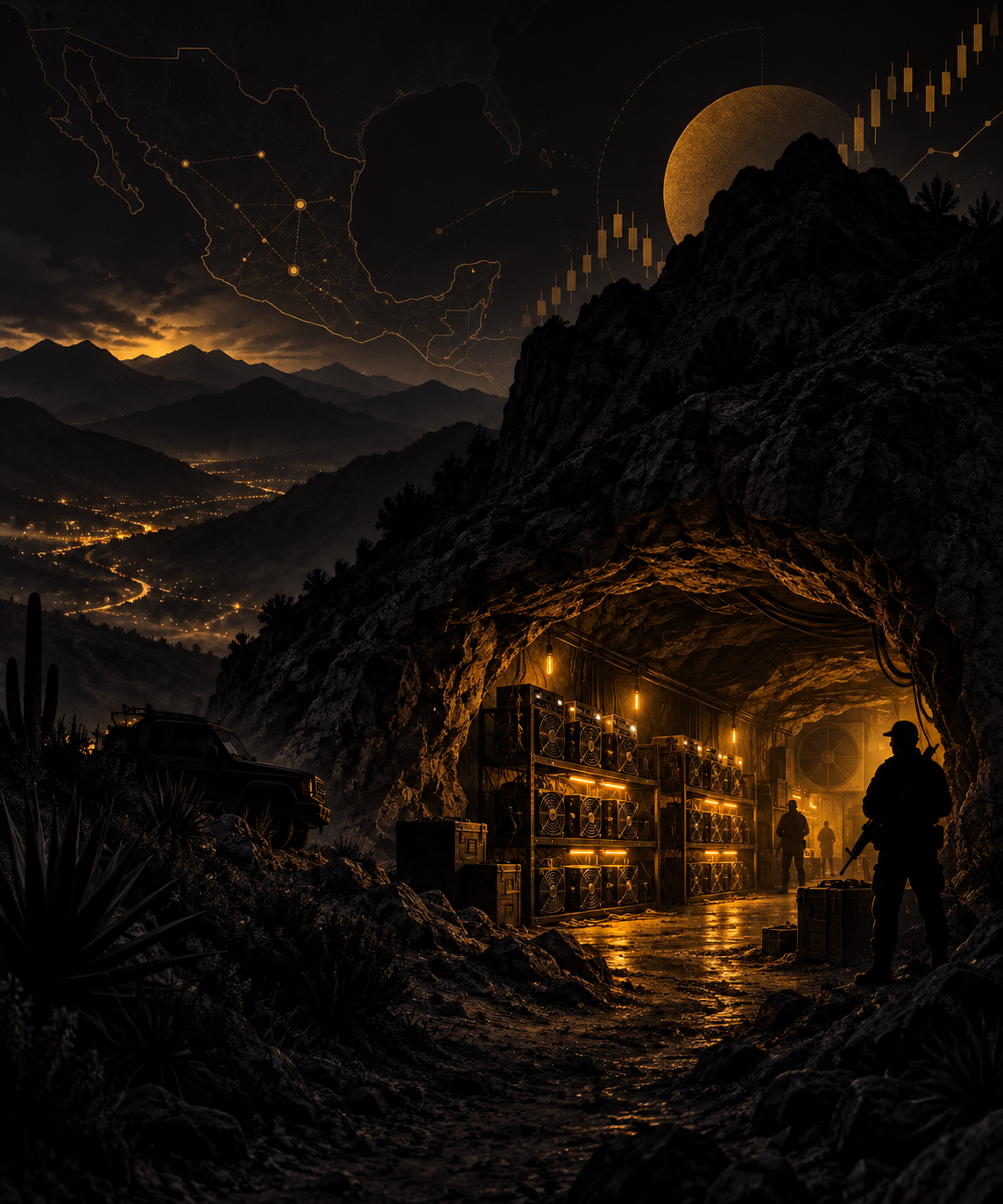 Photo: FluxrBot illustration
Illustration: FluxrBot.
Photo: FluxrBot illustration
Illustration: FluxrBot.
What would actually confirm it
Three kinds of document settle a story like this, in descending order of authority. A statement or press release from a Mexican federal body — the attorney general’s office, the state electricity utility, or the security secretariat — naming a location and a seizure. A US Treasury designation or a Justice Department filing naming an entity. Or a court record, which is public and citable by docket number.
Until one of those exists, the honest description of this story is: a headline, widely picked up, with no retrievable text.
Why mining-attribution stories are structurally hard to check
The physical part of a mine is easy to evidence. Machines draw measurable load; utilities see it; thermal and power signatures are detectable. Wikipedia’s entry on bitcoin mining sets out the mechanics — profitability is overwhelmingly a function of electricity cost and uptime, which is why remote, cheap-power sites attract operators of every kind.
The attribution part is hard. Linking a site to a criminal organisation requires an official assertion, and those usually arrive through unnamed security sources first, if at all. That gap — physical evidence available, attribution unavailable — is why so many stories in this genre circulate for weeks with the mine confirmed and the owner disputed.
How a crackdown becomes a tradeable contract
There is no listed prediction market on this story that we can find, and we are not going to pretend otherwise. What follows is mechanics, with illustrative figures only.
A binary contract pays $1 if a stated condition is met by a stated date and $0 if it is not. A contract at 20 cents implies buyers are paying as though the crowd puts the odds near one in five; our odds converter does that translation in both directions. “Was this farm cartel-run” is not a contract, because no official record resolves it. “Does the US Treasury designate a Mexico-based crypto mining entity before a given date” is one, because a Federal Register notice either appears or it does. Our field guide to reading Polymarket prices as probabilities covers why a price on a thin book is often less informative than it looks.
The broader version of this trade is regulatory rather than criminal. Enforcement usually lands as rules, and rules move on published schedules — proposal, comment period, final text. The SEC’s proposed crypto rulemaking is a live example of traders pricing those three moments as separate events.
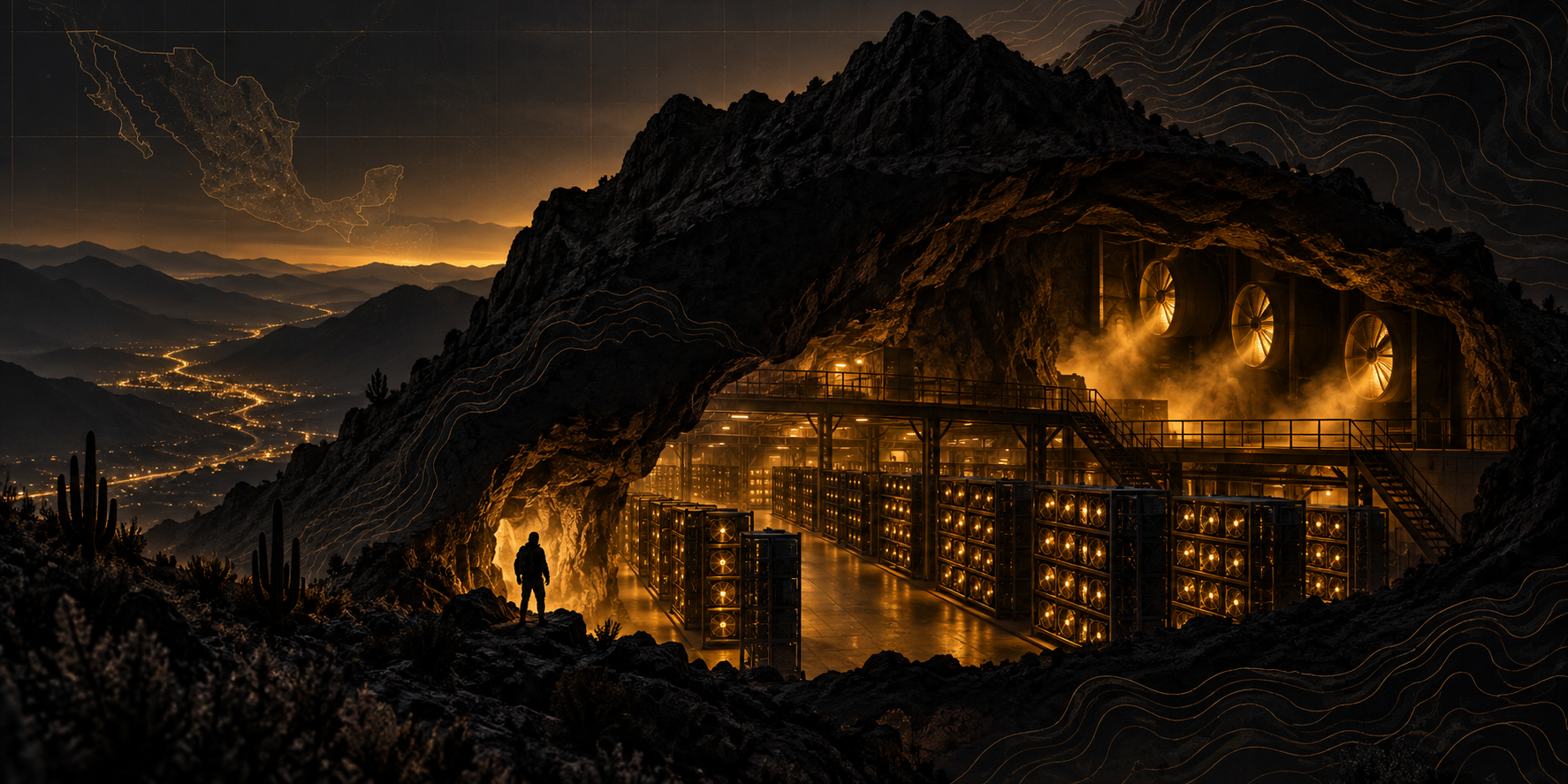 Photo: FluxrBot illustration
Illustration: FluxrBot.
Photo: FluxrBot illustration
Illustration: FluxrBot.
What we publish next
If a Mexican agency, Treasury or a court record confirms the site, we will rewrite this with the numbers in it and link the document at the top. If it is confirmed as a hoax or a mis-scraped headline, we will say that too, in the same place. Either way the update lands here rather than in a new post, so the record stays in one file.
Primary source: Reuters
FAQ
Is the hidden crypto mine in Mexico confirmed?
Not by anything we can check. A headline attributing the story to Reuters circulated with three logged pickups, but the article text attached to it was minified JavaScript with no reporting in it. No rig count, power figure, operator name or agency statement has a primary source we can see.
Why did the source text come back as code instead of an article?
Our best inference is that the page failed to render and the site’s client-side application bundle was returned to the scraper instead of the article body. That is a common failure mode, and it is why we do not treat a headline and a URL as a source on their own.
What would prove a mining site is cartel-run?
An official assertion with a name attached: a statement from a Mexican federal agency, a US Treasury designation, a Justice Department filing, or a court record. Physical evidence of mining — power load, machines — is easy to document; attribution to a criminal organisation is not.
Can you trade a prediction market on this story?
Not currently. No listed contract on the Mexican mining site was found in our tracking. Contracts in this space only exist when the resolution criterion is dated and binary, such as a Treasury designation appearing before a deadline.