Indonesia Ship Capsizes: 129 Missing in Java Sea
Indonesian rescuers search for 129 people still missing after a passenger ship capsized in the Java Sea. What happened and what we know.

Indonesian search and rescue teams are combing the Java Sea for 129 people still missing after a passenger ship capsized, according to Reuters. The sinking occurred over the weekend, adding to Indonesia’s long history of ferry and passenger vessel disasters in one of the world’s busiest and most complex maritime environments.
Reuters reported the capsize on Sunday, but details remain sparse. The nationality of the passengers, the vessel’s route, the cause of the sinking, and the number of people rescued or confirmed dead have not been disclosed. Indonesian authorities have not yet released an official manifest or casualty breakdown.
What we know about the sinking
The ship went down in the Java Sea, a shallow body of water between the islands of Java, Sumatra, Borneo, and Sulawesi. The sea is a critical corridor for inter-island transport in the Indonesian archipelago, where more than 17,000 islands are connected by a mix of modern ferries, aging passenger vessels, and informal boats that often operate beyond regulatory oversight.
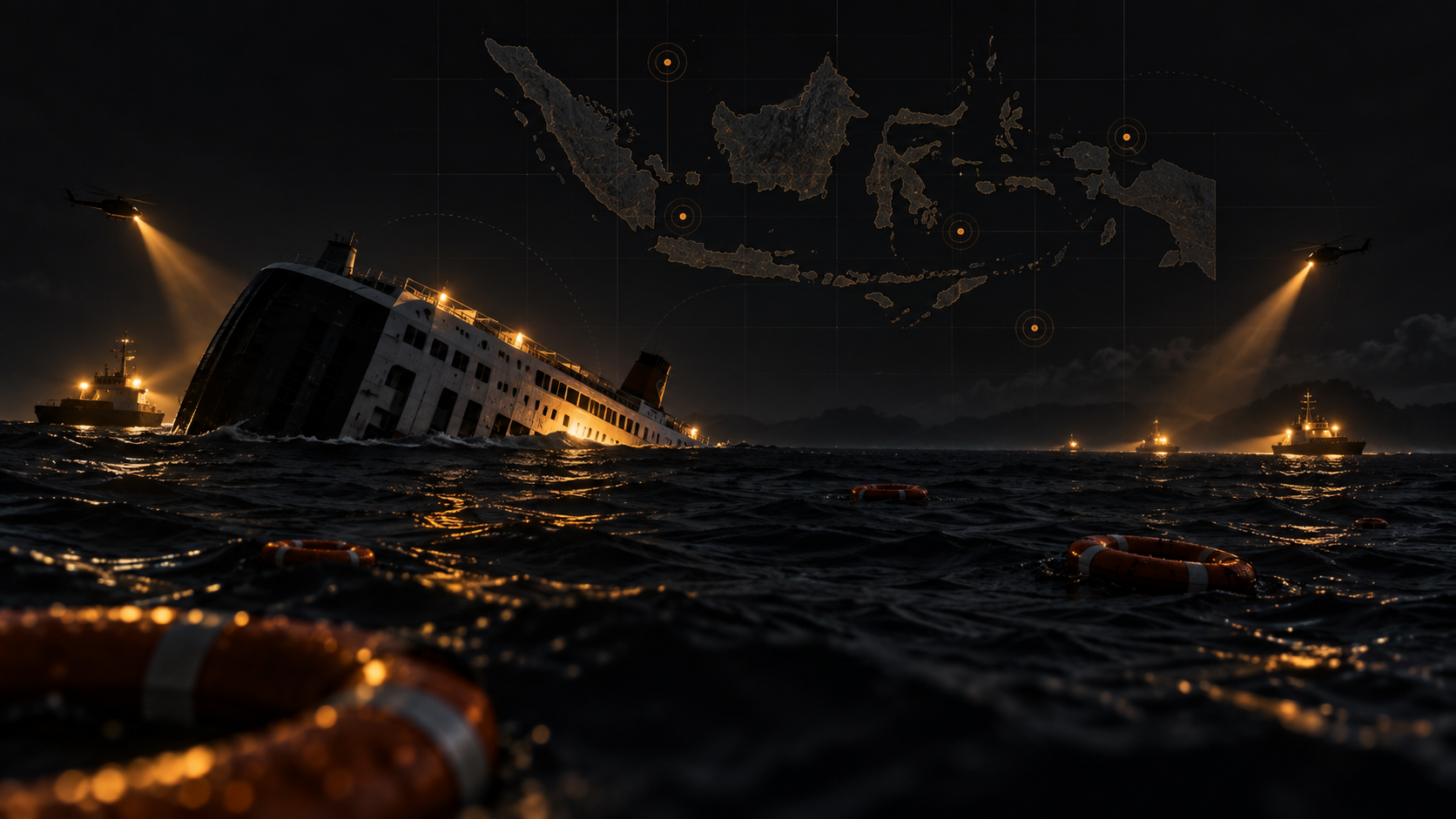 Photo: FluxrBot illustration
Indonesia’s maritime safety record is among the worst in Southeast Asia. Overcrowding, poor maintenance, and weak enforcement of safety standards have contributed to dozens of fatal sinkings over the past two decades. In 2018, a ferry sank in Lake Toba in North Sumatra, killing at least 167 people. In 2023, a wooden boat carrying asylum seekers capsized off the coast of Java, leaving more than 200 missing.
Search and rescue operations in Indonesian waters are often hampered by limited equipment, vast distances, and rough sea conditions. The Java Sea, despite its shallow depth, is known for sudden squalls and strong currents that can complicate recovery efforts.
The prediction-market angle
No major prediction markets are currently pricing this specific disaster. Maritime safety and disaster contracts occasionally appear on platforms like Polymarket or Kalshi when an incident has geopolitical implications—such as a military vessel sinking or a blockade—but passenger ship capsizes in Indonesia rarely generate tradeable contracts unless they escalate into a political crisis or shift regional transport policy.
When such contracts do trade, they typically ask whether a government will impose new regulations, whether a ferry operator will lose its license, or whether a death toll will exceed a certain threshold by a given date. Those markets tend to be thin, with wide bid-ask spreads, because the information flow is slow and uneven.
 Photo: FluxrBot illustration
What happens next
Indonesian rescue teams will continue searching, but the window for finding survivors narrows with each passing hour. If the vessel sank in deep water or far from shore, recovery of bodies and wreckage could take weeks. The government will likely launch an investigation into the cause, though such inquiries have historically moved slowly and often fail to produce accountability.
For families of the missing, the wait for information is agonizing. Indonesia’s fragmented maritime infrastructure means passenger lists are not always complete or accurate, and communication between local officials and central authorities can be delayed. The final toll may not be known for days or weeks.
This disaster is a reminder that maritime safety in the archipelago remains a persistent, unresolved problem. Until enforcement of passenger limits, safety inspections, and crew training improves, Indonesia’s waters will continue to claim lives at a rate that would be unthinkable in more developed maritime nations.
Primary source: Reuters
FAQ
How many people are missing after the Indonesia ship capsized?
Reuters reported that 129 people remain missing after the passenger ship capsized in the Java Sea. The number of survivors and confirmed fatalities has not been disclosed by Indonesian authorities.
Where did the Indonesian passenger ship sink?
The ship capsized in the Java Sea, a shallow body of water between the islands of Java, Sumatra, Borneo, and Sulawesi. It is a critical corridor for inter-island transport in Indonesia.
Why do so many ships sink in Indonesia?
Indonesia’s maritime safety record is poor due to overcrowding, aging vessels, weak enforcement of safety standards, and inadequate maintenance. The archipelago’s vast geography and limited rescue infrastructure also complicate response efforts.