French Train Derailment: Officials Probe 'Malicious Act'
French officials are probing whether a 'malicious act' caused a train derailment, the BBC reports. What's confirmed — and why no market prices it.
French officials are investigating whether a “malicious act” caused a train derailment, the BBC reports. Nothing beyond that has been confirmed in the material available to us: no location, no time, no casualty figure, no named operator.
That is a thin foundation for a story that is already moving, and the thinness is the point. Here is exactly what stands up and what does not.
What the reporting establishes
Two things. A train left the tracks in France. And officials have opened an inquiry that treats deliberate interference as a live possibility rather than something already excluded.
The BBC’s framing is careful: officials are investigating whether a malicious act caused the derailment. That is an open question, not a finding. No conclusion has been announced, and no alternative explanation — track defect, signalling failure, rolling-stock fault, weather — has been publicly confirmed either.
What has not appeared in the reporting available to us: where it happened, when, how many people were aboard, whether anyone was hurt, which company ran the service, or any statement from a prosecutor or the transport ministry. Those gaps are normal in the first hours of a rail incident. They are also why the story is spreading: a derailment with no cause named invites speculation faster than one with an official timeline attached.
Why the phrase “malicious act” is doing all the work
In a routine accident inquiry, the cause is sought in machinery and maintenance — the rail, the wheels, the signalling, the weather. When officials use language about a possible malicious act, they are signalling that human intent is on the table: that someone may have interfered with the railway on purpose.
That single distinction changes almost everything downstream.
It changes who investigates. Deliberate interference is a criminal matter, handled by police and prosecutors, rather than a purely technical one. France also maintains a dedicated rail accident investigation bureau, the BEA-TT, which publishes findings on serious accidents separately from any criminal process.
It changes the urgency. A person who sabotaged one train may not have stopped at one, which is why authorities in past cases have widened patrols along a line rather than simply reopening it.
And it changes what the public is told. Investigators are far more guarded with detail when a suspect may be reading the same statements. That is a plausible reason the early account is so sparse — but it is a reason, not a confirmed explanation, and it should not be presented as one.
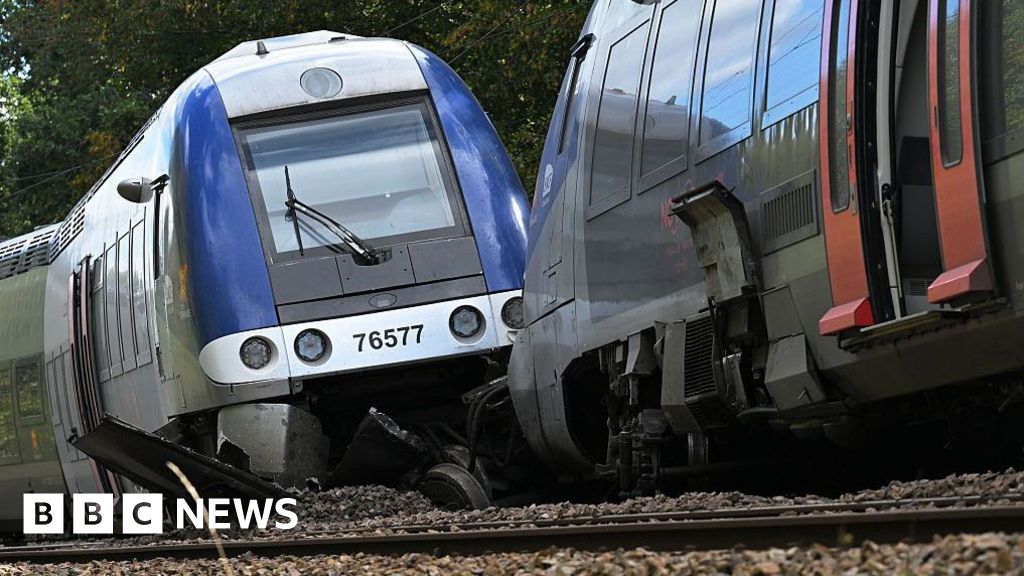 Photo: BBC
Was the French train derailment sabotage?
Not according to anything officials have said so far. The BBC reports that French officials are investigating whether a malicious act caused the derailment. The possibility is being examined; it has not been established. Treat every firmer claim circulating today — a location, a death toll, a suspect, a motive — as unverified until a French authority puts its name to it.
Practically, that means watching for three signals, roughly in the order they tend to arrive. First, service updates and a location from the rail operator or SNCF, which normally come before any legal language. Second, whether a judicial investigation is formally opened and by which office — that tells you whether the malicious-act line is being pursued or quietly dropped. Third, a first technical finding on track and rolling stock, which usually lands days later and either supports or undercuts the sabotage question.
Is there a market on this?
Nothing in the reporting cites a live contract on the derailment or its cause, and there is no obvious one to point at. That is typical, and the reason is structural.
Prediction markets need a question with a clean, checkable answer — a resolution rule stating precisely what counts as “yes.” A contract asking whether officials will formally attribute a derailment to sabotage would have to name its resolver: a prosecutor’s statement, a court finding, a report from a named safety authority. Hours into an investigation, none of that exists. The question is unpriceable rather than mispriced.
For readers new to the mechanics: a prediction-market contract is a yes/no question that pays $1 if the stated outcome happens and $0 if it does not. Price and probability are the same number in different clothes — to take an entirely illustrative case, a contract trading at 62 cents implies roughly a 62% chance, adjusted for fees and for how thin the order book is. No such contract exists here; the figure is only there to show how the translation works. Our odds converter does that arithmetic in either direction, and our five-minute field guide to reading odds as probabilities covers the caveats.
The more useful lesson is about absence. We wrote recently about a political story that moved on one quote with no live prices at all — a reminder that most breaking news never gets a contract, and that the lack of a market is itself information. When there is nothing to trade, there is also nothing to be wrong about in public. The only way to follow this story is to read the officials.
 Photo: FluxrBot illustration
Until one of those three signals appears, the honest summary is the one the BBC gave: a train derailed in France, and officials want to know whether someone made it happen.
Primary source: BBC
FAQ
Was the French train derailment caused by sabotage?
Not according to anything officials have said so far. The BBC reports that French officials are investigating whether a malicious act caused the derailment, which means the possibility is being examined rather than established.
Where and when did the French train derailment happen?
The reporting available to us does not say. No location, date, operator, passenger count or casualty figure has been confirmed, which is common in the first hours of a rail incident.
Who investigates a possible sabotage of a French railway?
Deliberate interference is a criminal matter for police and prosecutors rather than a purely technical one. France also has a dedicated rail accident investigation bureau, the BEA-TT, which publishes findings on serious accidents separately.
Is there a prediction market on the derailment?
No live contract on the derailment or its cause is cited in the available reporting. Markets need a resolution rule naming what counts as a confirmed finding, and hours into an investigation no such resolver exists.