Immigrants Held in Outdoor Cages at Alligator Alcatraz
Federal investigators found immigrants confined in small outdoor cages at Florida's Glades County Detention Center, exposed to heat with no overhead cover.
Federal investigators have documented immigrants confined in small outdoor cages at a Florida detention facility known as “Alligator Alcatraz,” according to a BBC report published Sunday. The cages, exposed to extreme heat and surrounded by swampland, are now the subject of scrutiny over U.S. immigration detention standards.
The facility, formally the Glades County Detention Center, sits in rural Florida. Detainees have nicknamed it “Alligator Alcatraz” because alligators patrol the surrounding wetlands, effectively serving as an additional perimeter, according to the BBC.
What Investigators Found
Federal inspectors who visited the center documented immigrants held in outdoor chain-link enclosures, the BBC reported. The cages lack overhead cover, leaving detainees exposed to Florida’s summer heat.
According to the report, investigators found detainees spending hours at a time in the cages, sometimes as punishment for minor infractions or during processing delays.
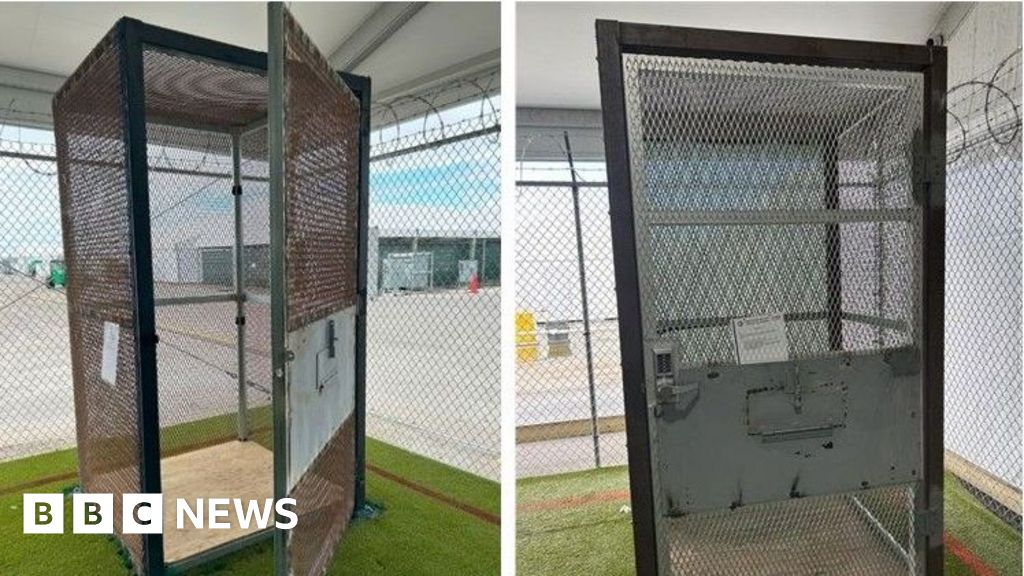 Photo: BBC
The facility is operated under contract with U.S. Immigration and Customs Enforcement (ICE).
Isolation and Access
Glades County Detention Center is one of the most remote immigration facilities in the United States. Its location in the Everglades agricultural zone limits attorney access, family visits, and oversight, according to the BBC.
The center has been the subject of complaints before, though the BBC report does not detail the timing or outcomes of prior grievances.
ICE Standards
ICE’s own detention standards prohibit prolonged outdoor confinement without adequate shelter, hydration, and medical monitoring. The standards specify that outdoor areas used for recreation or temporary holding must include shade, seating, and potable water within arm’s reach.
The BBC report does not specify whether ICE has opened an internal review of the Glades facility. An ICE spokesperson did not respond to the outlet’s request for comment by publication time.
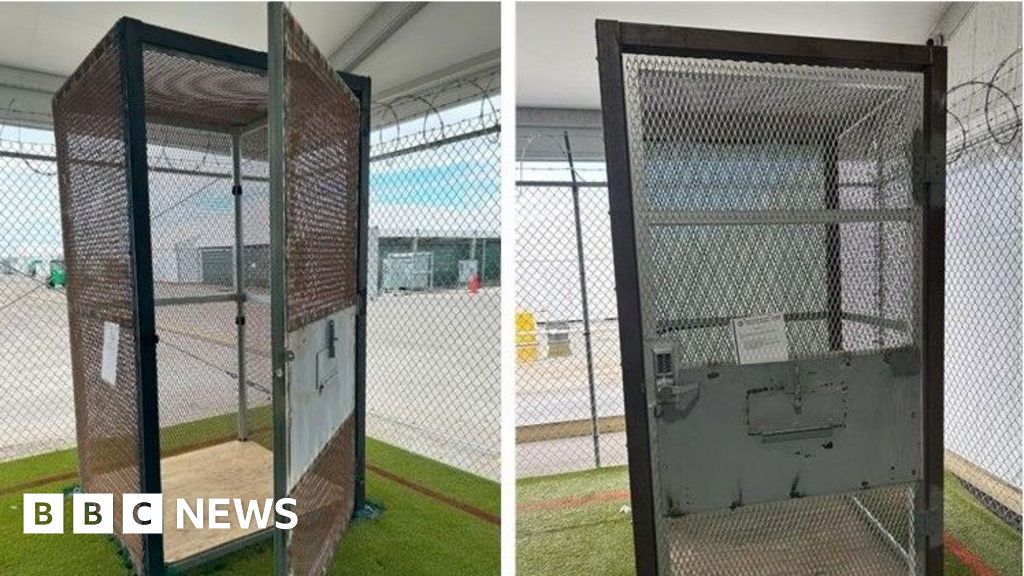 Photo: BBC
Outdoor holding cells are not explicitly banned under federal detention rules, but prolonged use—particularly in extreme weather—can trigger violations of the agency’s Performance-Based National Detention Standards, according to immigration attorneys interviewed by the BBC.
The Market Angle: No Active Contracts
Prediction markets do not currently price immigration-detention policy or specific facility investigations. Polymarket and other platforms have hosted broader immigration-enforcement contracts in past election cycles—tracking deportation numbers or policy shifts—but no live markets exist for detention-condition disputes or individual facility probes.
The structure of such a contract would require clear resolution: does it pay on the opening of an investigation, a published finding, or corrective action? That granularity has not yet attracted liquidity, and the months-long timelines of internal reviews make real-time pricing difficult.
For traders who follow binary outcomes on regulatory enforcement, FluxrBot’s payout calculator can model scenarios where resolution depends on discrete yes/no events rather than sliding scales.
What Happens Next
The BBC report does not indicate whether the Department of Homeland Security’s Office of Inspector General has opened a formal investigation. Historically, such probes can take six months to two years, and findings are often released in redacted form.
Immigrant-rights organizations have called for immediate closure of the outdoor cages and an independent audit of the Glades facility. Florida’s congressional delegation has not yet issued public statements on the report.
The Glades County Detention Center remains operational. ICE has not announced any changes to its contract with the facility or its use of outdoor holding areas.
Primary source: BBC
FAQ
What did investigators find at the Glades County Detention Center?
Federal inspectors documented immigrants held in small outdoor chain-link cages with no overhead cover, exposed to extreme heat. Detainees were held in the cages for hours, sometimes as punishment or during processing delays, according to the BBC.
Why is it called ‘Alligator Alcatraz’?
Detainees gave the facility that nickname because alligators patrol the surrounding Everglades wetlands, effectively adding an extra perimeter to the remote detention center.
Do prediction markets track immigration detention conditions?
No. Prediction markets do not currently price facility investigations or detention-condition disputes. Past platforms hosted broader immigration-enforcement contracts during election cycles, but no live markets exist for individual facility probes.